
Founders in Focus
The Many Rooms Anita Erskine Has Learned to Build In
Building a Career Around Communication and Leadership
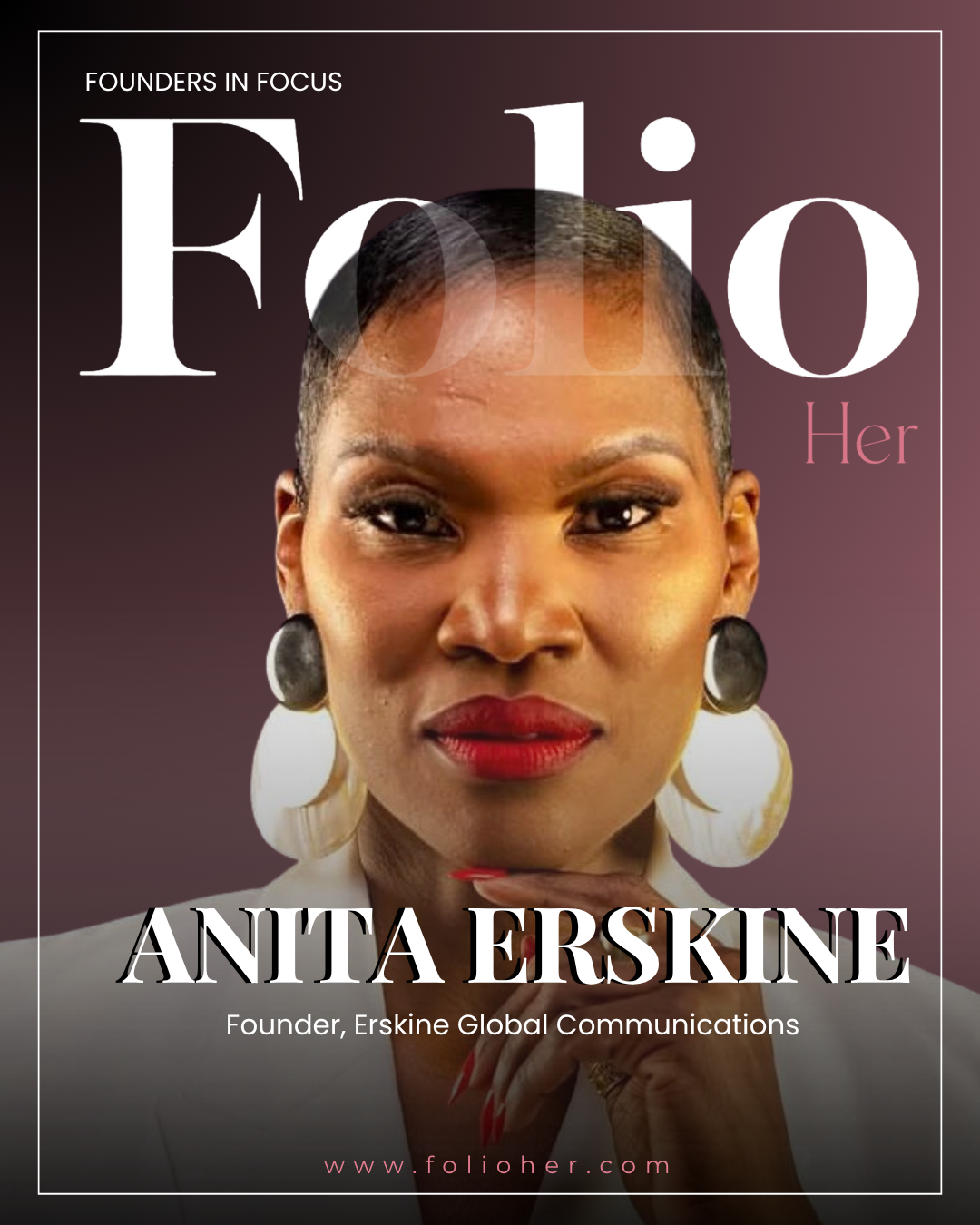
Anita Erskine has spent enough time around microphones, cameras and high-level rooms to know that being heard and communicating effectively are not the same thing.
That distinction sits quietly underneath much of her career.
Since beginning her broadcasting career in the late 1990s, Anita has worked across radio and television, hosted and produced programmes, moderated major international conversations and eventually built a strategic communications company of her own. Today, through Erskine Global Communications, she works with governments, multinational organisations, development institutions and private-sector leaders on the work that happens after the attention has been secured: shaping the message, finding the right language and making sure an important idea can move beyond the room where it was first expressed.
It is a natural progression when viewed from a distance. In practice, it has required Anita to keep expanding her understanding of what communication can do.
Being a broadcaster teaches you how to connect with an audience. Being a moderator requires something different: the ability to listen closely enough to understand what a conversation needs, to know when to press a point and when to let someone else take it further. Building a communications company adds another layer, because the work is no longer only about what Anita herself can communicate. It is about helping other people and organisations understand what they need to say and how to say it.
That is the space Erskine Global Communications occupies.
Founded in 2016, the company works across strategic communications, leadership voice development, high-level moderation, stakeholder engagement and media production. Its clients and partners have included institutions such as the United Nations, World Bank Group, African Union, AfCFTA and ECOWAS.
The company therefore reflects more than Anita’s experience in media. It reflects the way that experience has changed her understanding of communication itself.
Over the years, she has found herself in rooms where the stakes are considerably higher than producing a good interview or delivering a polished event. She has moderated conversations involving heads of state, ministers, business leaders, investors and development institutions. She has hosted platforms focused on entrepreneurship, sustainability, innovation, leadership and Africa’s economic future.
The responsibility in those rooms is not simply to keep a programme moving.
It is to understand enough about what is being discussed to know which questions matter, to give people enough space to say something meaningful and to keep the conversation useful to everyone listening.
That same instinct can be seen in the platforms Anita has created herself.
Through Anita Erskine’s Sheroes, The Leadership Voice and The STEM Woman Project, she has continued to create spaces where other people can develop their own voices and participate in conversations that matter to them. Her work with Africa’s Business Heroes has extended that role into entrepreneurship, where she has spent years interviewing, hosting and engaging with founders building businesses across the continent.
There is something significant about that progression.
A career that began with learning how to speak to an audience has developed into one centred increasingly on helping other people communicate what they are building, why it matters and where they want it to go.
Not the confidence of always having something to say, but the confidence to recognise when the most useful thing you can do is make space for someone else to say theirs.
It also explains why entrepreneurship has become such an important part of Anita’s work. Her company is not an extension of her television career in the narrow sense. It is a business built from the knowledge accumulated through years of being in conversations with people who are trying to lead, change, build and persuade.
The experience has also meant learning that communication is not an accessory to serious work.
For a founder, it can determine whether people understand the business. For an institution, it can influence whether an important programme earns trust. For a leader, it can affect whether people understand not only what they are trying to achieve, but why it deserves their attention. Anita has built her career around that intersection.
The visible part is the stage. The deeper work happens in understanding what the stage is for.
That may be why the different parts of her career sit together more naturally than they first appear to. Broadcasting, strategic communications, moderation, entrepreneurship and leadership development are not separate identities so much as different applications of the same ability: understanding people, understanding ideas and knowing how to bring the two into conversation.
After more than two decades in the field, Anita is still building around that ability.
The company is one expression of it. The platforms she has created are another. The rooms she continues to moderate are another.
And the work remains fundamentally about the same thing: making communication useful enough to move people, organisations and ideas forward.