When Helping Was No Longer Enough: Damilola Feyide and Let It Shine Academy
The first version of Let It Shine Academy was much smaller than the institution it is today.
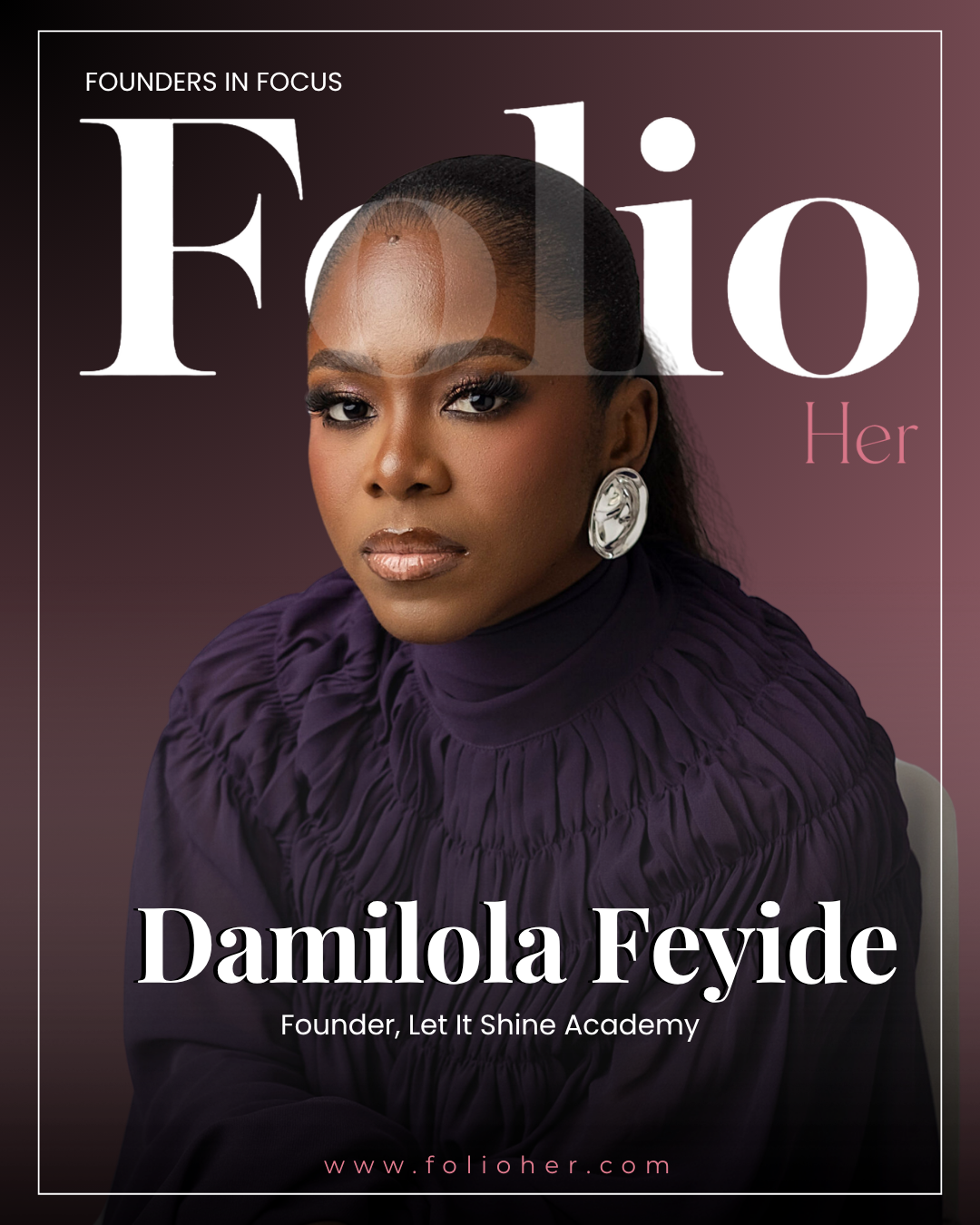
It began as a free creative academy, meeting children on Saturdays and giving them access to creative and vocational skills. It was a meaningful intervention, but as Damilola Feyide spent more time with the children she was trying to serve, another reality became difficult to ignore: a few hours of access could not address everything that stood between them and a different future.
So the work had to become bigger.
LISA eventually became a free secondary school. In September 2025, it became a boarding school, creating a more comprehensive environment in which students could learn, live, eat, receive mentorship and develop other skills.
That progression tells us something important about the way Dammy has built. She has not treated the first solution as the final one.
Each stage of the organisation has required her to look again at what the children actually need and ask whether what she has built is enough to meet it.
That is a much harder question than simply asking whether an organisation is growing.
Growth can be measured in students, programmes, buildings and reach. Sufficiency is more complicated. It asks whether the structure being built is actually addressing the problem it was created to address. For LISA, that has meant moving beyond classroom access.
A child cannot learn effectively if food is uncertain. Education becomes harder to sustain when a safe place to live is missing. A school can teach a curriculum, but it can also become a place where a child develops confidence, discipline, practical skills and a sense of what might be possible for their life.
The boarding model reflects that broader understanding. LISA describes itself not only as a school, but as a safe and structured environment where vulnerable children can receive formal education alongside meals, accommodation, mentorship and vocational and creative skills.
That kind of institution does not run on intention alone.
It requires teachers, administrators, funding, infrastructure, safeguarding, systems and the daily discipline of making sure that the quality of what is promised can actually be delivered.
That is the less visible part of Dammy’s work.
The idea may have started with education, but building the institution has required her to learn about everything around education that makes it possible.
There is also a practical question that runs through the work: what happens when the children who need access are not necessarily close to the institution itself?
That question has informed another part of Dammy’s work through THEO by LISA, an offline digital learning initiative designed to extend educational resources to children who may not have consistent access to the internet.
Again, the point is not simply the technology. It is the thinking behind it.
If access to quality education is limited by geography, connectivity or the availability of physical resources, then the solution has to consider those barriers rather than assuming that every child can simply walk into the same classroom.
The more the work has developed, the more Dammy has had to think in terms of systems.
That is what makes the journey different from a conventional account of social impact. It is easy to document the visible moments: a child enters school, a new classroom opens, a programme launches, a student succeeds.
The harder work is building something that can keep producing those moments.
It is deciding what the organisation needs next, finding the resources to make it possible, creating structures that can support more children without losing the quality of care, and remaining close enough to the original problem to know when the organisation needs to change again.
That has been the movement of LISA.
The creative academy was not discarded when the school emerged. It became part of a larger understanding of what education could look like for the children the organisation serves. The school did not make the need for broader access disappear. It created another set of questions about how the work could reach further.
A child needs a classroom, but may also need food. A child needs education, but may also need safety. A child needs a teacher, but may also need someone who helps them imagine themselves differently.
And an organisation built around all of that needs more than passion to survive. It needs structure.
Dammy is still building that structure.
The institution is larger than the first idea, and the responsibility that comes with it is larger too. But the central work remains remarkably close to the question that started it: what would it take to give children who have been denied opportunity a genuine chance to build different lives?
LISA is one answer. The work now is making that answer strong enough to last.