
Making African Stories Travel: The Work Mo Abudu Has Built Around a Vision
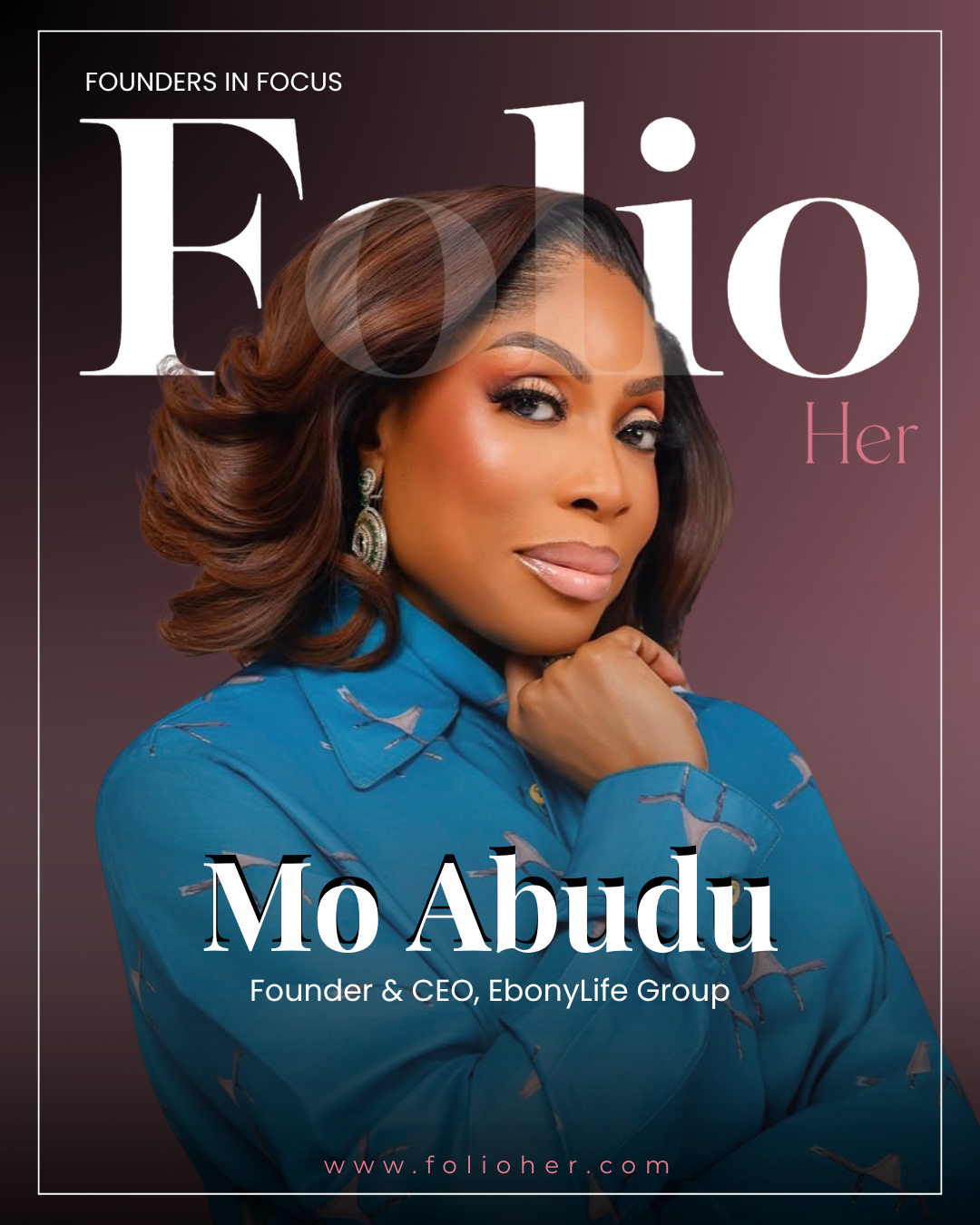
There is a point in some businesses when the original idea stops being large enough to contain the ambition behind it.
For Mo Abudu, that point came early.
When she entered television with Moments with Mo, she had already spent years building a career in human resources. She had worked at ExxonMobil and later founded Vic Lawrence & Associates, her own HR consulting firm. She understood corporate structures, people and management. Television was different. She had no established career in broadcasting to fall back on and no obvious reason why a network should take a chance on a woman arriving with an idea for a Pan-African talk show.
She pursued it anyway.
Moments with Mo began airing in 2006 after Abudu developed the concept and worked through the practical problem of getting it onto television. The programme eventually became syndicated across several African markets. But the experience appears to have done more than establish her as a television host. It gave her a closer view of the larger space she wanted to occupy. If conversations about Africa could travel across borders through one programme, what else could be possible if there were an entire platform built around African stories?
That question became EbonyLife TV.
When the channel launched in 2013, Abudu was no longer simply building a programme around her own presence. She was building a media organisation that needed programming, production teams, commercial relationships, distribution and a clear identity. The scale of responsibility changed because the scale of the idea had changed. Her official biography describes EbonyLife TV as a Pan-African platform created to connect Africa through a shared identity and to present a more positive narrative around the continent.
But an idea about storytelling becomes much more complicated when you have to produce the stories.
That meant developing original television, finding writers and producers, working with talent, building audiences and learning how the economics of media actually work. It also meant persuading people outside Africa to take the work seriously.
That part of the building process has never been especially glamorous.
In a 2023 conversation with Forbes, Abudu recalled the experience of entering international media markets and encountering the polite meetings, exchanged business cards and emails that went nowhere. Her response was not to stop knocking. She continued pursuing international relationships and pitching projects until some of those conversations became actual partnerships.
That persistence matters because the ambition was always larger than having a successful African television channel.
EbonyLife moved into film production in 2014. Projects including Fifty, The Wedding Party, Chief Daddy, The Royal Hibiscus Hotel and Òlòtūré placed the company in another part of the entertainment business, one with different economics, different creative processes and different expectations from audiences. Again, the business had to learn a new language.
Film production requires a different set of relationships from television broadcasting. International distribution introduces another set of negotiations. Partnerships with organisations such as Sony Pictures Television, Netflix, Westbrook Studios, BBC Studios and others have meant operating within a global entertainment industry while continuing to develop stories rooted in African experiences.
That is one of the more revealing things about Abudu’s journey: the work kept requiring her to become conversant in industries she had not originally set out to master.
She did not begin as a filmmaker.
She did not begin as a broadcaster.
She did not begin with a background in entertainment. She began with an understanding of organisations and people, and then repeatedly entered unfamiliar territory because the thing she wanted to build required it.
That distinction becomes important when looking at what EbonyLife eventually became. The company expanded beyond producing and distributing content. EbonyLife Place was created as a physical entertainment and hospitality destination in Lagos. In 2021, the EbonyLife Group partnered with the Lagos State Government to establish the EbonyLife Creative Academy, offering practical training in filmmaking and media production.
These ventures can look, from the outside, like a collection of businesses.
There is a different way to read them.
Each one responds to something the previous stage of building had revealed.
If African stories are going to travel, there must be stories worth travelling with.
If there are going to be more stories, there must be people capable of making them.
If those people are going to compete globally, they need access to training and professional networks.
And if audiences are going to experience entertainment as more than something they watch at home, there is value in creating physical spaces around it too.
The point is not that every problem requires another company.
It is that building one part of a creative ecosystem can expose the missing pieces around it.
Mo has had to make decisions in that environment while also building teams capable of carrying work that has become too large for one person to hold alone. In a recent 2026 conversation, she spoke about her decision to step away from hosting Moments with Mo and allow the programme to continue with other hosts. The significance of that decision is not simply that she left a programme she created. It is that she allowed something strongly associated with her own identity to continue without requiring her presence at its centre.
That is a different stage of founderhood.
In the beginning, the founder often is the pitch. The founder carries the idea into rooms where nobody knows whether it will work. The founder makes the calls, opens the doors, persuades the first partners and becomes closely identified with whatever is being built.
Eventually, if the organisation is going to become an institution, that relationship has to change.
The work has to become transferable.
People have to be able to carry it.
The brand has to survive decisions that the founder does not personally make.
And the founder has to become comfortable with the fact that not every important part of the organisation will have her name or face attached to it.
Abudu’s more recent work suggests that this question of what comes after the founder is becoming increasingly relevant to the way she builds. The EbonyLife Creative Academy, for example, is not simply another business extension. It is an attempt to increase the number of people who can participate in the industry itself. Her current work also includes plans around a wider African film fund and the development of EbonyLife Place London, according to the International Finance Corporation.
The scale has changed considerably from the woman who first walked into a television opportunity with Moments with Mo. But perhaps the more interesting continuity is that she has kept responding to the same underlying problem: how do you move African stories further? The answer has never remained fixed.
At one point, it was a talk show. Then it became a television network.
Then film production. Then international partnerships. Then a physical entertainment space. Then training people to build within the industry.
Now the work extends into new forms of financing, distribution and international creative infrastructure.
Each answer has created another question.
And each question has demanded something different from the woman answering it.
This is where the public list of achievements can obscure the actual experience of building. A new company or partnership is visible once it exists. The years spent learning an unfamiliar industry, finding the right people, convincing sceptics, raising money, absorbing rejection and making decisions without knowing exactly how they will turn out are much harder to see.
Mo Abudu has spoken openly about the importance of relationships, persistence, people and story development in building EbonyLife. Her earlier experience also meant that she entered entrepreneurship more than once, rather than making one clean leap from corporate life into the media industry. That matters because it changes the picture of what entrepreneurship looks like. It was not one moment when Mo Abudu became a founder.
It was a series of decisions in which the next thing she wanted to build demanded that she learn something she had not previously needed to know.
There is still more being built.
And perhaps that is the most useful thing to notice about a career that could easily be reduced to its milestones.
The companies are real. The productions are real. The partnerships are real. But underneath them is a founder who has repeatedly had to enlarge her understanding of what the work requires.
A talk-show host became a media entrepreneur. A media entrepreneur became a producer. A producer became a builder of creative infrastructure. And the infrastructure is still being shaped.
The story, then, is not simply about how much Mo Abudu has built.
It is about what each new layer of the work has required her to learn, whom she has had to bring into the room, what she has had to let go of, and how an idea that began with a television programme gradually became something much larger than television.
That is what happens when a founder keeps asking the question beyond the first answer.